What Homebuyers Need to Know Before You Decide
Buying a home with live knob and tube wiring requires careful consideration. You don’t need opinions — you need facts.
Many older homes in Kansas still contain active knob and tube electrical systems. Understanding what it is, what the risks actually are, and how it affects insurance and future upgrades will help you make an informed decision.
Is Knob and Tube Wiring Dangerous?
Millions of homes across the United States still have knob and tube wiring. There’s no solid evidence that it is inherently more dangerous than other wiring types when it is in good condition and unaltered.
The biggest limitation is the lack of a ground wire. By modern electrical standards, that makes it less safe but not automatically unsafe.
Installing GFCI breakers or GFCI receptacles can significantly reduce shock risk and improve overall safety.
The key factor isn’t age. It’s condition.
What Is Knob and Tube Wiring?
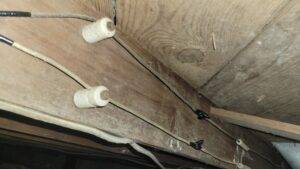
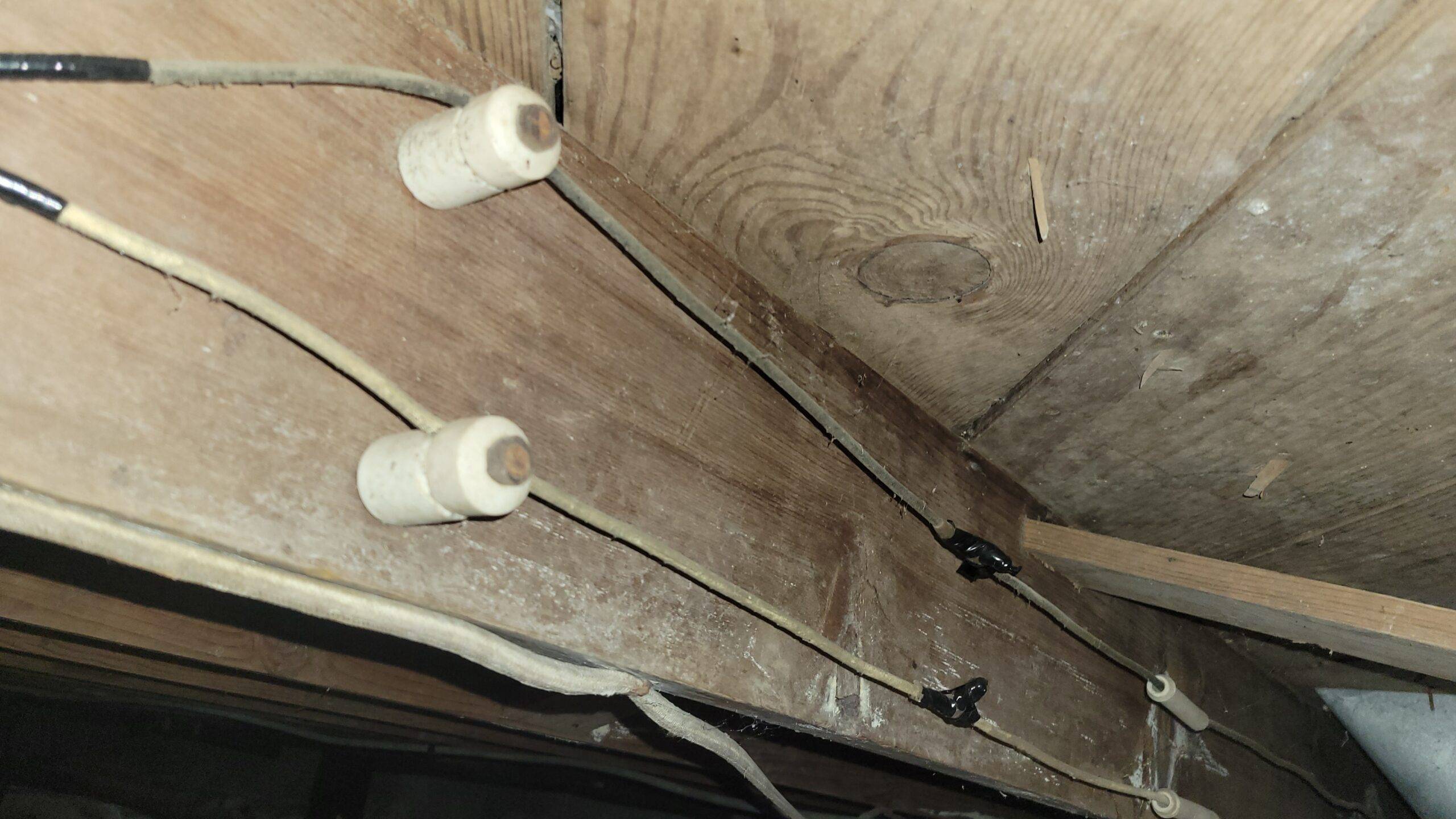
Knob and tube wiring was commonly installed in homes built roughly between the 1880s and 1940s. It uses:
- Ceramic knobs to secure wiring to framing
- Ceramic tubes to protect wires passing through wood
- Individual hot and neutral conductors (no grounding conductor)
When left intact and undisturbed, the system can function as originally designed. Problems typically arise when modern electrical demands are added to an outdated system.
Where the Real Risk Comes From
The wiring itself usually isn’t the primary concern improper alterations are.
Nearly all the serious issues associated with knob and tube wiring come from:
- Amateur splices hidden in walls or attics
- Overloaded circuits
- Mixing modern NM cable with original knob and tube
- Insulating over active wiring (which is prohibited by building codes)
A thorough home inspection can identify many visible concerns, but not all wiring is accessible. Hidden modifications are where risk often increases.
Insurance and Financing Challenges
Even when knob and tube wiring is functioning properly, it can create practical obstacles.
Some insurance carriers:
- Refuse to insure homes with active knob and tube wiring
- Require full replacement before issuing a policy
- Charge higher premiums
Before purchasing a home with knob and tube wiring in Kansas, it’s wise to speak with your insurance provider to understand your options.
Electrical Capacity Limitations
Knob and tube systems were not designed for modern electrical loads.
Common limitations include:
- No equipment grounding conductor
- Limited circuit capacity
- Difficulty adding new outlets or appliances
An updated electrical panel allows you to add new modern circuits, but original knob and tube circuits remain limited.
If you’re planning renovations, HVAC upgrades, or major appliance additions, electrical upgrades may be necessary.
When Knob and Tube Becomes a Serious Hazard
In rare cases, the cloth insulation surrounding the conductors deteriorates or falls away, leaving exposed live wiring.
That condition is dangerous and requires immediate correction.
However, in hundreds of inspections, the majority of knob and tube wiring encountered has been intact and functioning as originally intended.
It’s old. It’s limited. But often, it’s stable.
Should You Buy a Home with Knob and Tube Wiring?
Knob and tube wiring is not automatically a deal-breaker and it’s not something to ignore.
It requires context:
- Overall condition
- Evidence of improper modifications
- Insurance implications
- Your long-term renovation plans
If you understand its limitations, verify its condition, and plan for eventual upgrades, it can often be managed safely.
But it is rarely ideal and almost never future-proof.
Schedule a Knob and Tube Wiring Inspection in Kansas
If you’re buying an older home with knob and tube wiring, the most important step is a detailed inspection.
At Home Inspector Shane, I evaluate:
- Visible condition of knob and tube wiring
- Evidence of unsafe modifications
- Load concerns and panel upgrades
- Code-related concerns like insulation contact
- Overall safety context
My goal is to give you clear, practical information so you can make a confident decision.
Contact Home Inspector Shane today to schedule your home inspection in Kansas.