Why Mixing Copper and Steel Pipes Can Cause Problems
If you’ve ever looked at the plumbing in an older home, you may have noticed different types of piping connected together. One common example is copper piping connected directly to galvanized steel piping. While this may seem harmless, it can create a condition known as galvanic corrosion, which can eventually lead to leaks and plumbing failures.
What Is Galvanic Corrosion?
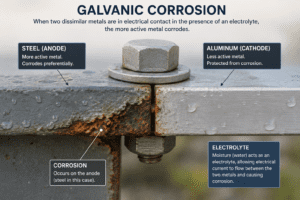
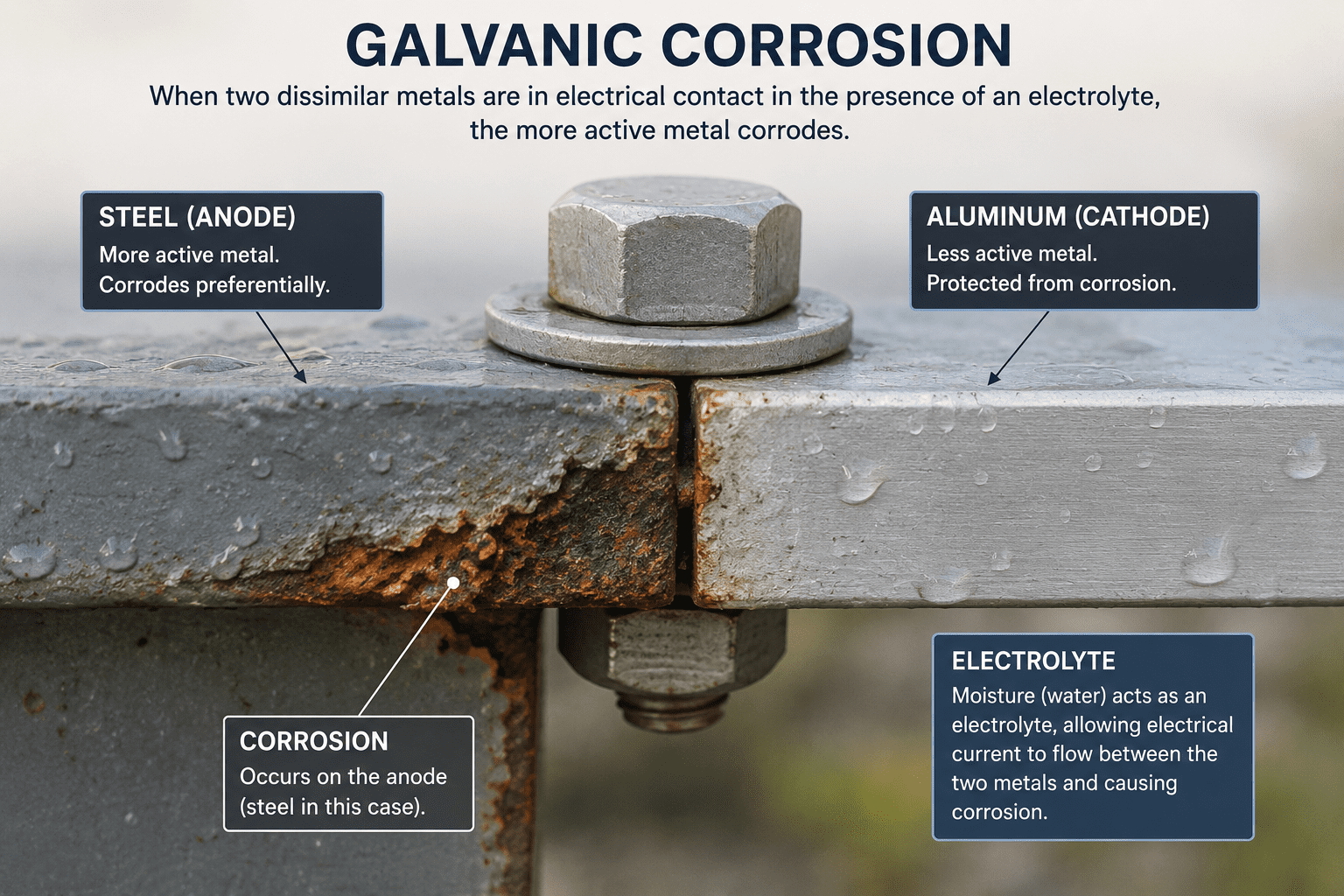
Think of galvanic corrosion like a small battery forming inside your plumbing system.
When two different metals are connected together and water is present, a tiny electrical current can develop between the metals. One metal becomes the “sacrificial” metal and begins to deteriorate faster than it normally would. Over time, this corrosion can weaken the pipe, create rust buildup, and eventually cause leaks.
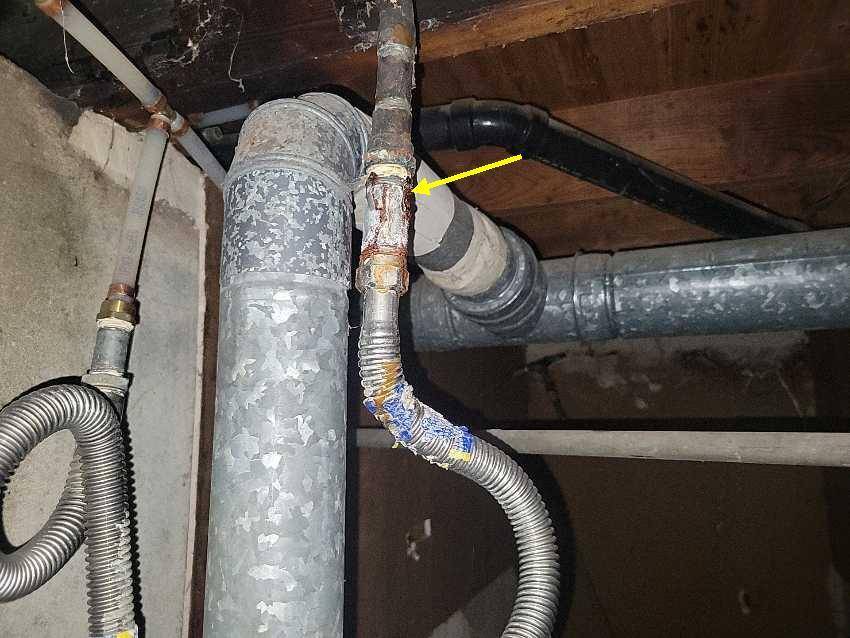
In residential plumbing, galvanized steel is typically the metal that suffers the most damage when connected directly to copper piping. The steel gradually corrodes while the copper remains largely unaffected.
Why Water Makes It Worse
Water acts as the conductor that allows this process to occur. Since plumbing systems are constantly exposed to water, conditions are ideal for galvanic corrosion whenever dissimilar metals are directly connected.
The corrosion often starts at the connection point and may not be visible until significant deterioration has already occurred.
Signs of Galvanic Corrosion
Homeowners may notice:
- Rust staining near pipe connections
- White or green mineral deposits
- Reduced water flow due to internal buildup
- Leaks at threaded fittings
- Deteriorated galvanized piping near copper connections
In some cases, the damage occurs inside the pipe where it cannot be seen until a leak develops.
The Importance of Dielectric Unions
To help prevent galvanic corrosion, plumbers often install a fitting called a dielectric union.
A dielectric union contains a non-conductive barrier that separates the two dissimilar metals. By preventing direct metal-to-metal contact, the fitting interrupts the electrical path that allows galvanic corrosion to occur.
A simple way to think about it is this:
Without a dielectric union, copper and steel are able to “communicate” electrically through the plumbing system.
With a dielectric union, that communication is interrupted, significantly reducing the potential for corrosion.
Where Are Dielectric Unions Commonly Found?
Dielectric unions are frequently installed:
- At water heaters
- Where copper piping transitions to galvanized steel piping
- At certain plumbing equipment connections
- In commercial and industrial plumbing systems
In some installations, brass fittings may also be used as an acceptable transition material because brass is more compatible with both copper and steel.
Why Homeowners Should Care
Galvanic corrosion is not usually an immediate problem. It is a slow process that can take years to become noticeable. However, when it finally reveals itself, it often appears as a plumbing leak, water damage, or expensive pipe replacement.
During a home inspection, finding copper and galvanized steel piping connected directly together without an approved transition fitting is often noted as a condition that should be monitored or evaluated by a qualified plumbing contractor.
A relatively inexpensive fitting installed today can help prevent much larger plumbing repairs in the future.
The Bottom Line
When different metals are connected in a plumbing system, corrosion can occur because of a natural electrochemical reaction. This process, known as galvanic corrosion, commonly affects galvanized steel piping connected directly to copper piping. Properly installed dielectric unions or approved transition fittings help separate the metals and reduce the risk of premature pipe failure.
Understanding this simple concept can help homeowners recognize potential plumbing issues before they become costly water damage repairs.